


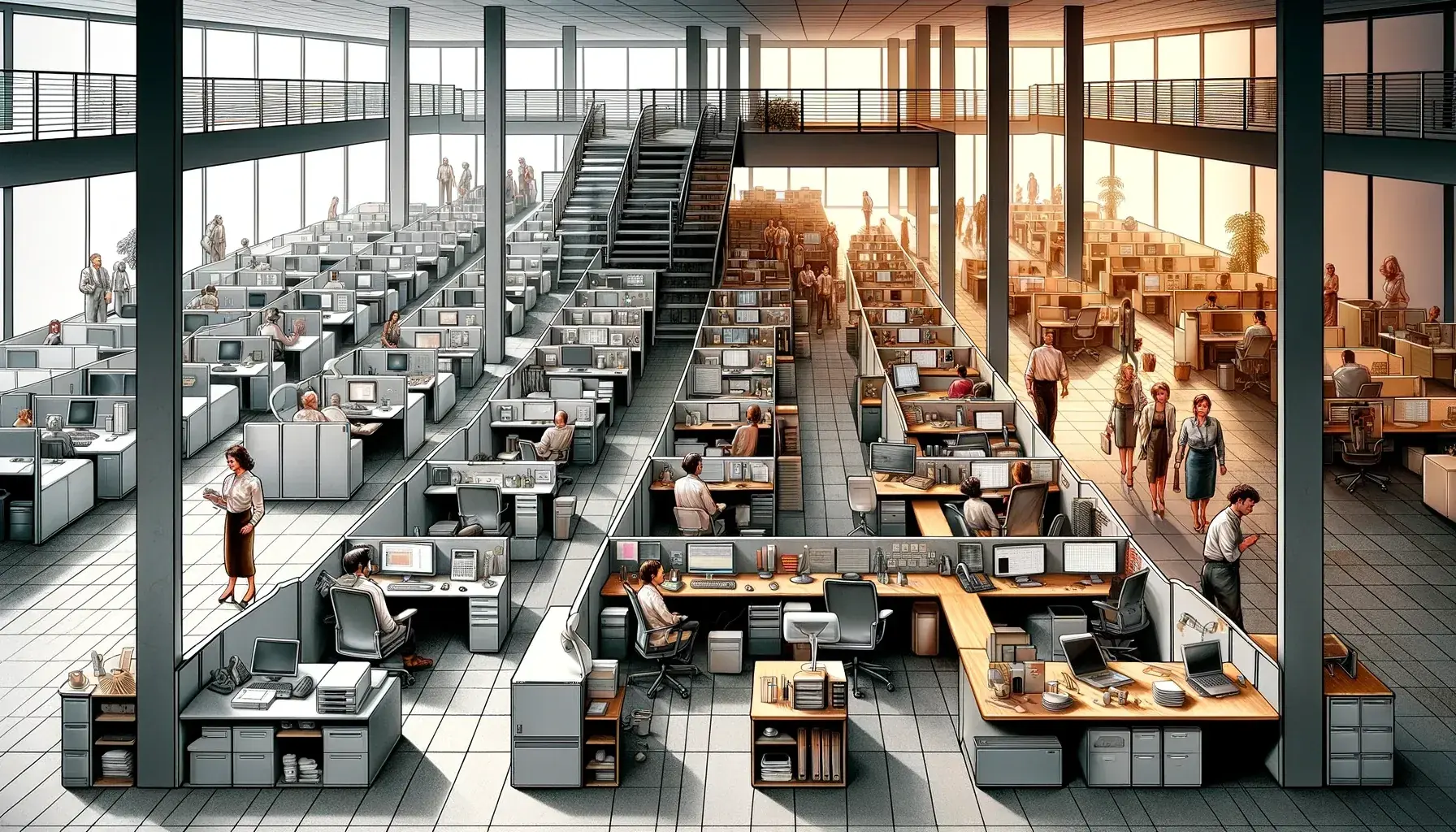
Office Space Cubicle: Pros, Cons & Alternatives
The original office cubicle wasn’t designed to be a soul-crushing box. In fact, its creator envisioned a flexible, empowering workspace that adapted to the worker. Somewhere along the way, that vision was lost, and the "cube farm" became a symbol of corporate conformity. Now, as companies rethink their entire approach to the workplace, we’re re-examining the core idea behind the cubicle: giving people their own space to focus. Is there still a place for the office space cubicle in a hybrid world? This article breaks down its complicated history, the real costs involved, and the modern alternatives that offer the privacy your team needs without sacrificing the collaborative culture you want to build.
Why Are We Ditching the Office Cubicle?
The evolution of office spaces reflects broader shifts in work culture and technology.
- From cubicles to open-plan: The rigid cubicle setup gave way to open plans for increased collaboration but led to distractions and decreased satisfaction.
- Flexible workspaces: Hot desking, remote options, and wellness areas now define modern offices, promoting adaptability and employee well-being.
- Role of technology: Advances in tech, like cloud computing and collaborative tools, enable dynamic, connected work environments.
- Future outlook: Successful office spaces will prioritize flexibility, adaptability, and employee-centric designs.
- Who it’s for: Office managers and business leaders designing modern, flexible work environments.
A Brief History of the Office Cubicle
To understand where the modern office is headed, it helps to look back at where it's been. The office cubicle, a staple of corporate life for decades, wasn't originally designed to be the soul-crushing box it’s often portrayed as. In fact, its creator had the opposite intention. The story of the cubicle is one of a well-meaning invention that took on a life of its own, shaping not just our physical workspaces but also our culture and our perception of office work itself. From its idealistic beginnings to its satirical representation in media, the cubicle’s journey is a fascinating reflection of changing workplace priorities.
The "Action Office II": An Origin Story
The office cubicle has a surprisingly optimistic origin story. It was developed by designer Robert Propst for the furniture company Herman Miller and introduced in 1967 as the "Action Office II." Propst envisioned a flexible, semi-enclosed workspace that would give employees more privacy and autonomy than the open-plan offices of the time. The original design featured adjustable-height desks, display surfaces, and partitions that could be configured in various ways to suit different tasks. The goal was to create a system that adapted to the worker, not the other way around. Unfortunately, companies saw the modular design as a way to cram more employees into less space, leading to the monotonous "cube farms" we know today.
The Cubicle in Pop Culture
Once the cubicle became a symbol of corporate conformity, pop culture was quick to take notice. The comic strip Dilbert, which debuted in 1989, built its entire brand on satirizing the absurdities of cubicle life, resonating with millions of office workers who felt trapped in their beige boxes. The 1999 film Office Space took this critique to another level, portraying the cubicle as a literal and metaphorical prison from which its protagonist desperately needed to escape. These portrayals cemented the cubicle's reputation as a place of monotony and stifled creativity, making it an easy villain in the story of workplace evolution and fueling the desire for more open and inspiring office designs.
Breaking Down the Cost of Cubicles
If you're considering cubicles for your office, one of the first questions you'll have is about the cost. The price tag can vary dramatically, so it's important to understand what factors into the final number. A basic, no-frills cubicle might be relatively inexpensive, but as you add features, better materials, and more complex configurations, the costs can climb quickly. Thinking about your budget requires more than just looking at the per-unit price; you also need to account for the services required to get them from the showroom floor to your office, fully assembled and ready for your team. A clear understanding of the full investment will help you make a decision that aligns with your company's financial and functional needs.
Factors That Influence Pricing
The cost of an office cubicle isn't one-size-fits-all. New cubicles can range from around $500 for a simple setup to over $10,000 for a high-end, executive model. The final price depends on several key factors, including size, materials, and features. A larger footprint or higher walls will naturally cost more. Likewise, premium materials like solid wood or glass partitions are more expensive than standard fabric and laminate. Additional features such as built-in storage, integrated power and data ports, and ergonomic accessories will also add to the total. When planning your budget, consider which of these elements are essential for your team's productivity and comfort.
What to Expect in a Price Quote
When you request a price quote for cubicles, don't just look at the number next to the product name. A comprehensive quote should be itemized to show you exactly what you're paying for. Beyond the cost of the cubicles themselves, make sure the estimate includes charges for layout planning and design services, which are crucial for optimizing your space. You should also look for line items covering delivery and professional installation. A poorly installed cubicle can be wobbly and unsafe, so paying for expert assembly is a worthwhile investment. Getting a detailed quote ensures there are no surprise costs and that your project is handled professionally from start to finish.
Types of Office Cubicles and Their Features
Not all cubicles are created equal. The modern cubicle has evolved far beyond the simple, uniform box of the past. Today, you can find a wide variety of styles, sizes, and configurations designed to meet the specific needs of different teams and work functions. From low-walled setups that encourage collaboration to fully enclosed pods for deep focus, the right choice depends entirely on the kind of work environment you want to create. Understanding the different types of cubicles and their unique features will allow you to design a workspace that is both functional and tailored to your company's culture, helping your team do their best work.
Choosing the Right Wall Height for Your Team
One of the most important decisions when selecting cubicles is the height of the walls, as it directly impacts privacy, collaboration, and the overall feel of the office. There's no single right answer; the ideal height depends on the nature of the work being done. A sales team might thrive in a low-walled, energetic environment, while a team of writers or developers may need higher walls to minimize distractions. By carefully considering the daily tasks and interaction styles of your employees, you can choose a wall height that strikes the perfect balance between individual focus and team connectivity, creating a more effective and harmonious workspace for everyone.
Low-Wall Cubicles for Collaboration
Low-wall cubicles, typically around 41 inches high, are designed to foster a collaborative and open atmosphere. These partitions are tall enough to define an individual's workspace and provide a surface for pinning notes, but they're low enough for team members to easily see and speak to one another while seated. This setup is ideal for teams that require frequent, spontaneous communication and a strong sense of camaraderie. While they don't offer much in the way of acoustic or visual privacy, low-wall cubicles help maintain the energy of an open office while still giving each employee a designated personal area.
Mid-Wall Cubicles for Balance
If you're looking for a happy medium, mid-wall cubicles are an excellent choice. Standing at about 53 inches, these walls provide seated privacy, allowing employees to focus on their tasks without visual distractions from their immediate neighbors. However, they are still low enough for team members to see across the office and interact with colleagues by simply standing up. This balanced approach makes mid-wall cubicles a versatile option for a wide range of departments, offering a blend of personal space for focused work and the opportunity for easy collaboration when needed.
High-Wall Cubicles for Privacy
When deep focus is the top priority, high-wall cubicles are the way to go. With walls reaching up to 83 inches or more, these setups create a private, enclosed workspace that significantly reduces both visual and auditory distractions. This makes them perfect for roles that involve sensitive information, frequent phone calls, or tasks requiring intense concentration, such as programming, writing, or financial analysis. While they can make an office feel more segmented, high-wall cubicles provide the quiet and seclusion that some employees need to be truly productive.
Specialty Cubicles and Modern Customizations
The world of cubicles extends far beyond standard workstations. Many manufacturers now offer specialty designs tailored to specific functions. For example, call center cubicles are typically smaller and designed with enhanced acoustic panels to absorb sound in a noisy environment. You can also find cubicles that are essentially mini-private offices, complete with taller walls and a lockable door. In response to recent health concerns, many companies have also introduced social distancing cubicles with higher, non-porous partitions. These modern customizations show that the cubicle is still adapting, offering tailored solutions for the evolving needs of the workplace.
The Pros and Cons of a Cube Farm
Deciding whether to implement a "cube farm" is a major decision for any office manager. On one hand, cubicles offer a practical solution that has been a workplace standard for over 50 years, providing a middle ground between the chaos of an open-plan office and the expense of private offices. They give employees a sense of personal space and can help manage noise levels. On the other hand, they carry the stigma of corporate monotony and can feel isolating, potentially hindering the spontaneous collaboration that drives innovation. Weighing the benefits against the drawbacks is key to determining if this classic office layout is the right fit for your company's culture and workflow.
The Benefits of Cubicles
Despite their reputation, cubicles offer several distinct advantages. They provide a cost-effective way to give each employee a defined, personal workspace with a degree of privacy that's impossible to achieve in a fully open office. This separation helps reduce visual distractions and can dampen ambient noise, allowing for better focus. Cubicles are also highly efficient from a space-planning perspective, enabling you to maximize the number of employees in a given area. For many businesses, they represent a practical compromise, offering a structured environment that supports individual work without the significant cost and permanence of building out individual offices.
The Drawbacks of Cubicles
Of course, cubicles are not without their downsides. The very walls that provide privacy can also create a sense of isolation, making it harder for team members to communicate and collaborate organically. A sea of identical cubicles can feel uninspiring and monotonous, potentially impacting employee morale and creativity. While they reduce distractions compared to an open plan, they are far from soundproof, and noise can still travel easily over the walls. This environment can sometimes lead to lower productivity if employees feel disconnected or constantly interrupted by nearby conversations.
Modern Alternatives to the Office Cubicle
As companies increasingly embrace flexibility and collaboration, many are looking beyond the traditional cubicle for their office design. The modern workplace is all about choice and variety, offering different types of spaces to suit different tasks and work styles. The goal is to create a dynamic environment where employees can move freely between areas designed for deep focus, teamwork, and casual interaction. From soundproof pods for private calls to comfortable lounge areas for brainstorming sessions, these alternatives are reshaping the office into a more engaging and productive ecosystem. Exploring these options can help you create a workspace that truly supports the way your team works today.
Private Pods for Focused Work
One of the most popular alternatives to the traditional cubicle is the private pod. These are small, self-contained, and often soundproof rooms designed for one or two people. They serve as an on-demand oasis for tasks that require deep concentration or privacy, such as important phone calls, video conferences, or focused writing. Pods offer a perfect escape from the hustle and bustle of an open or semi-open office without the need for permanent construction. By placing a few of these throughout your workspace, you give employees the autonomy to choose a quieter setting whenever they need it, supporting productivity and reducing distractions for everyone.
Bench Desking for Collaboration
For teams that thrive on constant interaction, bench desking is an excellent solution. This layout features long, shared tables where multiple employees sit together without partitions. It's a space-efficient design that promotes a strong sense of community and makes it incredibly easy for team members to ask questions, share ideas, and collaborate on projects in real time. While it offers little in the way of privacy, bench desking is perfect for highly collaborative departments like creative teams, marketing groups, or startup environments where energy and open communication are key drivers of success. It creates a lively, communal atmosphere that can foster teamwork and innovation.
Modular and Flexible Workstations
Modular workstations are the direct descendants of the original "Action Office" concept, but with a modern twist. This type of furniture consists of movable desks, screens, and storage units that can be easily reconfigured to adapt to changing needs. A team might arrange their desks together for a collaborative project one week, then break them apart for individual tasks the next. This flexibility is ideal for agile work environments and growing companies where team sizes and project requirements are constantly shifting. It empowers teams to customize their own space, ensuring the office layout always supports the work at hand rather than dictating it.
Managing Flexible Spaces with Desk Booking Software
When you introduce flexible options like modular workstations or unassigned seating, you need a system to prevent chaos. This is where desk booking software becomes essential. Tools like Officely integrate directly into platforms your team already uses, such as Slack and Microsoft Teams, making it incredibly simple for employees to find and reserve a desk for the day. This eliminates the morning scramble for a good spot and gives office managers clear visibility into who is coming into the office and how the space is being used. It’s the operational backbone that makes a truly flexible and efficient hybrid work model possible.
Lounge Areas for Informal Meetings
Work doesn't always happen at a desk. Creating comfortable lounge areas with sofas, armchairs, and coffee tables provides a relaxed setting for informal collaboration and brainstorming. These spaces are perfect for casual team check-ins, creative discussions, or simply taking a break from the screen. They encourage a different kind of interaction than a formal conference room, often leading to more open and creative conversations. By incorporating these "third spaces" into your office design, you foster a more welcoming and versatile environment that acknowledges the importance of both focused work and relaxed, social connection.
Smart Ways to Purchase and Improve Cubicles
If you've decided that cubicles are the right choice for your office, there are smart ways to acquire and enhance them to create a better work environment. You don't have to settle for a drab, uninspired setup. With strategic purchasing decisions and a few simple upgrades, you can transform standard cubicles into more comfortable, functional, and personalized workspaces. Whether you're working with a tight budget or simply want to make the most of your investment, thinking creatively about how you buy and outfit your cubicles can have a significant impact on employee satisfaction and productivity. It’s about making a classic solution feel fresh and modern.
Buying Options: New, Used, and Refurbished
You don't always have to buy new to get high-quality cubicles. If you're on a budget, exploring the market for used and refurbished options can lead to significant savings. Used cubicles are sold as-is, while refurbished ones have been professionally cleaned, repaired, and often updated with new fabric or surfaces, making them look almost new. When considering these options, be sure to inspect the quality carefully and inquire about any available warranties. Whether you choose new, used, or refurbished, purchasing from a reputable dealer will ensure you get a durable product that meets your needs and your budget.
Simple "Cubicle Hacks" to Upgrade Your Space
Even a standard cubicle can be transformed into a more pleasant and ergonomic workspace with a few simple "hacks." Encourage employees to personalize their areas with plants, photos, and organizers to make the space feel like their own. From a wellness perspective, providing height-adjustable desk converters allows employees to easily switch between sitting and standing throughout the day. Improving lighting with individual desk lamps can reduce eye strain, while adding small acoustic panels can help absorb sound. These small, inexpensive upgrades can make a huge difference in the daily comfort and happiness of your team.
The Post-Pandemic Return of the Partition
The COVID-19 pandemic forced a massive reconsideration of the open-office concept. In the rush to create safer workplaces, many companies began installing plexiglass dividers and other partitions between desks, effectively reintroducing the core concept of the cubicle. This shift wasn't driven by a desire for the old-school cube farm, but by a new and urgent need for physical separation and personal space. This "return of the partition" signals a broader trend toward more balanced office designs. It suggests that the future of the workplace isn't a complete return to isolated cubicles or fully open plans, but a hybrid approach that values both safety and collaboration, giving employees the protected personal space they need to feel comfortable at work.
Frequently Asked Questions
Are cubicles still a good choice for a modern office? Absolutely, but it depends on your team's needs. The old-school "cube farm" gets a bad rap for good reason, but the modern cubicle is much more versatile. If your employees need a dedicated space to focus without the complete isolation or cost of a private office, cubicles can be a perfect middle ground. The key is to choose the right type and mix them with other kinds of workspaces to create a balanced environment.
How do I decide between cubicles and other options like private pods or bench desking? Think about the primary type of work your team does. If their day is filled with heads-down, concentrated tasks, cubicles with higher walls or private pods offer necessary quiet. If their work is highly collaborative and requires constant conversation, bench desking might be a better fit. Most successful modern offices use a mix, providing a variety of spaces so employees can choose the setting that best suits their task at that moment.
My office already has cubicles. How can I make them feel less like a "cube farm"? You can make a huge impact with a few simple changes. Encourage personalization with plants and photos. Improve the ergonomics with height-adjustable desk converters and better task lighting. You can also add small, sound-absorbing panels to the walls to cut down on noise. The goal is to break up the monotony and give each employee more control and comfort in their personal space.
I'm on a tight budget. Are cubicles an affordable option? They certainly can be. While high-end, feature-rich cubicles can be expensive, there are many budget-friendly choices. Exploring refurbished or high-quality used cubicles can save you a significant amount of money without sacrificing quality. When getting a quote, just make sure it includes all the necessary services like design, delivery, and installation so you have a clear picture of the total cost.
How can cubicles work in a flexible or hybrid office model? Cubicles fit perfectly into a hybrid model when they are treated as a bookable resource rather than assigned seating. By pairing your physical cubicles with a desk booking system, employees coming into the office can easily reserve a space for the day. This approach, often called "hot desking," allows you to support a larger, flexible workforce with fewer desks, making your office space much more efficient.
Key Takeaways
- Prioritize privacy without creating isolation: The need for a personal, distraction-free zone is as relevant as ever. The goal is to offer focused spaces using modern solutions like high-wall cubicles or private pods, rather than building a monotonous "cube farm" that hinders connection.
- Design for the task, not just the team: A one-size-fits-all layout doesn't work. The most effective offices provide a mix of environments—like collaborative benches, quiet pods, and informal lounges—so employees can choose the best space for what they need to accomplish.
- Pair flexibility with a simple system: To make hot desking or modular workstations successful, you need a way to manage them. Desk booking software that integrates with tools your team already uses prevents confusion and ensures your flexible office runs efficiently.


