



Hybrid Work Definition: What Does It Really Mean?
Is your office a ghost town on Tuesdays but buzzing on Wednesdays? This is the new normal for many of us. Hybrid work offers the best of both worlds: the flexibility of home and the energy of the office. But what does 'hybrid' really mean for your team? Without a solid hybrid work definition, you risk confusion and chaos. Getting the definition of hybrid working right is crucial. It's about more than just a schedule; it's about understanding the core features of a hybrid office and creating a clear policy that supports everyone.
So, is it the best of both worlds? If done correctly, it absolutely can be.
However, to make hybrid work actually work for your team, you need the right tools, a solid process, a good hybrid work policy – and be willing to tackle the difficulties that you might encounter.
In this guide, we’ll break down what hybrid work is, talk about its benefits and challenges, and see how you can make it successful for your team. Whether you’re a manager or business owner, this is your go-to resource for understanding hybrid work and how to use it to build a better workplace where your team thrives.
Breaking Down the Hybrid Work Model
Hybrid work is an approach that combines the best of both worlds: remote and in-person work.
The goal? Give your team members the freedom to choose how they work but also encourage in-person collaboration for more challenging tasks, especially those where team creativity and innovation are required.
What Does "Hybrid Work" Actually Mean?
Hybrid work is a work arrangement that allows employees to divide their time between working remotely (from home or from another location) and working in a physical office, coworking area, or other designated spaces where they can meet their coworkers.
In essence, hybrid work blurs the boundaries between the traditional office and remote work, creating a dynamic and adaptable work environment, where employees can integrate their work and personal lives without compromising either.
It gives employees the flexibility to work from anywhere, including another country (as long as they have the legal right to do so) while also providing an actual office space where they can have face-to-face interactions with coworkers some days of the week and/or /month.
The main idea behind this arrangement is that work is not limited to a specific location, but rather focuses on outcomes and productivity.
Hybrid Work vs. Hybrid Work From Home
You might hear the terms "hybrid work" and "hybrid work from home" used interchangeably, but there's a subtle difference. "Hybrid work" is the more accurate and inclusive term. It describes a flexible model where employees split their time between the main office and any remote location—not just their house. This could be a local coffee shop, a coworking space, or even another city for a few weeks. The focus is on giving employees a better balance between work and life by offering different scheduling options. It’s less about where you work and more about creating a structure that supports both focused individual tasks and valuable in-person collaboration.
Hybrid Work by the Numbers
If you're wondering whether hybrid work is just a passing trend, the data tells a clear story. According to an Accenture study, 58% of people were already working in a hybrid capacity during the pandemic, and a staggering 83% believe it's the best model for the future. This preference is echoed in a Gallup survey, which found that more than half of employees who can work remotely want a hybrid arrangement. The benefits are tangible, too. The same survey noted that spending two to three days in the office is the sweet spot, leading to happier employees, less burnout, and fewer people looking to quit. These numbers show that a well-managed hybrid model isn't just a perk; it's a powerful strategy for retention and employee well-being.
How Hybrid Work Became the New Norm
The idea of hybrid work isn’t new, but it took center stage during the COVID-19 pandemic, when it spiked from just 6% of full workdays to more than 50% in early 2020. As workplaces went remote overnight, businesses realized that teams could stay productive and engaged without the traditional office setup.
The pandemic also forced companies to adapt quickly and many found that not only did remote work sustain productivity, but it also improved employee satisfaction. This shift has cemented hybrid work as a cornerstone of many modern workplaces’ strategy.
Now, hybrid work has progressively evolved from a short-term fix to a long-term strategy. Employee expectations have shifted and despite the return-to-office mandates of many large companies, for many, remote or hybrid work is a clear benefit they’re not willing to forgo.
Thankfully, there are plenty of tools you could use to simplify hybrid work for everyone involved, and create an environment that’s truly inclusive and adaptable.
The Core Features of a Hybrid Office
Hybrid work is all about letting teams choose when and where they’re most productive, and giving them the autonomy to work in a way that works best for them. Here are the key characteristics that shape hybrid arrangements:
- Flexible schedules: Employees can split time between home and the office based on their preferences, tasks, and meetings with coworkers.
- Adaptable office setups: Spaces are designed for different types of work, including collaboration and tasks that require deep focus.
- Tech-enabled coordination: Hot desking apps like Officely simplify desk booking, team schedules, and resource management.
- Clear communication: Transparency and prompt communication are a must in a hybrid setup and help keep everyone aligned, whether they’re remote or on-site.
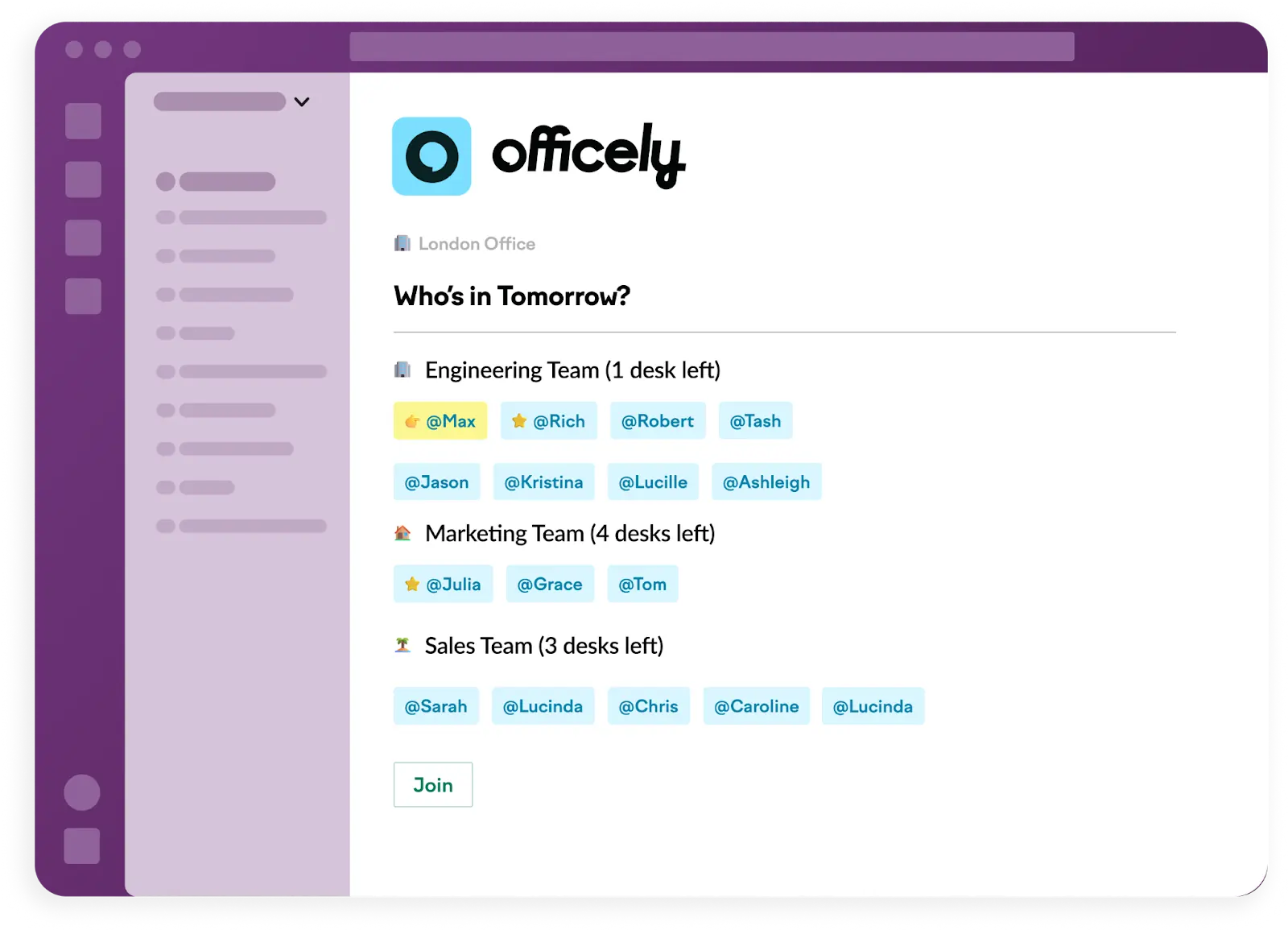
Officely makes it easy for your team members to see who’s coming in and when – and book desks to join in
With the right tools and approach, a hybrid setup can be a powerful way to keep your best talent and empower your team to work wherever’s best for them.
Types of Hybrid Work Models
The term "hybrid work" doesn't refer to a single, rigid structure. Instead, it’s an umbrella term for several different arrangements that blend remote and in-office work. The right model for your company depends on your team's needs, your industry, and your overall business goals. Understanding the most common types can help you decide which approach—or combination of approaches—makes the most sense for your organization. Each model offers a different balance of flexibility, structure, and autonomy, so it's worth exploring them to find the perfect fit.
Fixed or Split-Week Model
This is one of the most straightforward hybrid models. In a fixed or split-week arrangement, employees have designated days they are required to be in the office and specific days they can work remotely. For example, a company might mandate that everyone comes into the office on Tuesdays and Thursdays. This approach provides predictability for both employees and managers, making it easier to schedule in-person meetings and collaborative sessions. While it offers less flexibility than other models, its clear structure can help maintain a consistent team presence and simplify coordination across the entire organization.
Employee Choice Model
The employee choice model offers the highest degree of flexibility and autonomy. With this approach, employees are free to decide when they come into the office and when they work from home, aligning their location with their tasks for the day. For instance, someone might choose to come in for a team brainstorming session but stay home for deep-focus work. While this model is excellent for empowering employees and improving work-life balance, it requires robust coordination tools to avoid chaos. Without a system to see who is in the office, it can be difficult to plan collaborative work or even know if you'll have a desk when you arrive.
Manager-Scheduled Model
In a manager-scheduled model, team leaders determine the in-office schedule for their direct reports. This approach allows managers to align their team's presence with specific project needs or collaboration goals. For example, a manager might require their entire team to be in the office for the first week of a new project to facilitate planning and kickoff meetings. This model ensures that teams are together when it matters most, but it can sometimes feel less autonomous for employees compared to a choice-first model. It strikes a balance between team-level coordination and organizational flexibility.
Team-Based Model
Similar to the manager-scheduled model, the team-based approach lets individual teams or departments set their own hybrid schedules. However, the key difference is that the decision is made collectively by the team rather than dictated by a manager. This democratic process empowers teams to create a schedule that works best for their specific workflows and collaborative rhythms. For example, the marketing team might decide to come in on Mondays for creative sessions, while the engineering team might prefer Wednesdays for sprint planning. This model fosters autonomy and ensures that in-office days are highly relevant to the team's immediate goals.
Digital-First Model
A digital-first model, also known as a remote-first model, treats remote work as the default. Most work is done from home, and the physical office serves as an occasional hub for specific, intentional purposes like team-building events, client meetings, or intensive workshops. Companies that adopt this model often invest heavily in digital collaboration tools to ensure a seamless remote experience. The office becomes a destination rather than a daily requirement, offering a space for the kind of high-value, in-person interactions that are difficult to replicate online. This approach is ideal for organizations with a geographically distributed workforce.
Challenges of the Hybrid Model
While the hybrid model offers a compelling mix of flexibility and connection, it's not without its challenges. Successfully transitioning to a hybrid environment requires more than just letting people work from home a few days a week; it demands a thoughtful approach to overcoming potential hurdles. From ensuring fairness to maintaining a strong company culture, leaders need to be proactive in addressing these issues. Recognizing these challenges is the first step toward building a hybrid workplace that is productive, inclusive, and sustainable for the long term.
Maintaining Fairness and Inclusion
One of the biggest risks in a hybrid model is the emergence of proximity bias, where employees who are physically present in the office are perceived as more productive or committed than their remote counterparts. This can lead to in-office employees receiving more opportunities for career advancement and recognition, creating an unfair two-tiered system. Furthermore, not all roles are equally suited for hybrid work, which can create feelings of inequity between different departments. To counter this, leaders must intentionally create a level playing field by focusing on outcomes rather than presence and ensuring remote employees have equal access to information and opportunities.
Fostering Collaboration and Connection
When teams are split between the office and remote locations, those spontaneous "water cooler" conversations that often spark new ideas can become rare. Building and maintaining a strong company culture is also more difficult when people aren't physically together as often. Collaboration has to become more intentional, requiring careful planning to ensure everyone can participate effectively, regardless of their location. Without a deliberate effort to foster connection through virtual and in-person events, employees can feel isolated, and team cohesion can suffer.
Addressing Unequal Home Work Environments
The reality is that not everyone has an ideal setup for remote work. Some employees may have a dedicated home office with high-speed internet, while others might be working from a small apartment with unreliable Wi-Fi and multiple distractions. This disparity can create an uneven playing field, impacting productivity, well-being, and even the ability to participate fully in virtual meetings. Companies should consider providing stipends for home office equipment or offering access to coworking spaces to help bridge this gap and ensure all employees have a comfortable and effective workspace, no matter where they are.
Overcoming Leadership Skepticism
Despite the widespread adoption of flexible work, some leaders remain skeptical about the hybrid model. They may worry about a decline in productivity, a loss of control, or the erosion of company culture. This skepticism can lead to micromanagement of remote employees or pressure for a full-time return to the office, undermining the trust that is essential for a successful hybrid environment. Overcoming this requires a shift in mindset from managing by presence to managing by results. Demonstrating the success of hybrid work through clear performance metrics and open communication can help build the confidence needed for leaders to fully embrace this new way of working.
How to Implement a Successful Hybrid Strategy
Making the switch to a hybrid model is a significant organizational change that requires careful planning and execution. A successful strategy is built on a foundation of clear policies, supportive leadership, and the right technology. It’s about more than just logistics; it’s about intentionally designing a work environment that empowers your team to do their best work, whether they're at home or in the office. By taking a proactive and thoughtful approach, you can create a hybrid model that not only works but also becomes a competitive advantage for your company.
Set Clear Policies and Expectations
Clarity is key to a smooth-running hybrid workplace. The first step is to create a formal hybrid work policy that outlines the rules of engagement. This document should clearly define expectations for things like core working hours, communication response times, and how scheduling will be handled. It should also specify which roles are eligible for hybrid work and what the process is for requesting a flexible arrangement. A well-defined policy eliminates ambiguity, ensures fairness, and provides a single source of truth that both employees and managers can refer to, preventing confusion and frustration down the line.
Train Managers to Lead Hybrid Teams
Leading a team that is split between different locations requires a new set of skills. Managers need to shift from overseeing tasks to focusing on outcomes and learn how to foster an inclusive environment for everyone, regardless of where they work. It's crucial to invest in training that equips your leaders with the tools to manage remote performance, facilitate effective hybrid meetings, and maintain strong team connections. When managers are confident in their ability to lead hybrid teams, they can build the trust and psychological safety necessary for their teams to thrive.
Rethink Your Office Space for Collaboration
In a hybrid model, the purpose of the office changes. It's no longer just a place for individual work; it's a central hub for collaboration, connection, and culture-building. This means your physical space needs to adapt. Consider reconfiguring the layout to include more collaborative zones, private booths for video calls, and comfortable social areas. Since not everyone will be in the office every day, implementing a hot desk booking system is an efficient way to manage flexible seating and ensure that employees always have a place to work when they come in. The goal is to make the office a destination that people want to visit.
Use Technology to Bridge the Gap
Technology is the backbone of any successful hybrid model, enabling seamless communication and coordination between in-office and remote employees. The right tools can break down location-based barriers and create a unified work experience for everyone. From project management software to communication platforms, your tech stack should be chosen to support flexibility and keep everyone connected. This is where investing in purpose-built solutions can make a significant difference in the day-to-day experience of your team.
Desk and Room Booking Software
To avoid the chaos of a crowded office and the frustration of not finding a desk, a reliable booking system is essential. Tools like Officely integrate directly into platforms your team already uses, such as Slack and Microsoft Teams, making it incredibly simple for employees to reserve a desk or a meeting room. This eliminates the need for another app and password. With a quick command, employees can see who’s planning to be in the office on any given day and book a spot next to their colleagues, turning the office into an intentional space for collaboration.
Workplace Scheduling and Analytics
Understanding how your office is being used is critical for making informed decisions about your space and resources. Workplace analytics software provides valuable data on office attendance, peak usage days, and which areas are most popular. This information can help you optimize your office layout, adjust cleaning schedules, and even decide on your future real estate needs. By using data to guide your strategy, you can ensure your workplace is designed to meet the actual needs of your employees, creating a more efficient and effective environment for everyone.
Gather Employee Feedback Regularly
Your hybrid policy shouldn't be a static document. The world of work is constantly evolving, and your strategy should be flexible enough to adapt. The best way to know what's working and what isn't is to ask your employees. Use regular surveys, pulse checks, and open forums to gather feedback on their experience. This not only helps you identify areas for improvement but also makes your team feel heard and valued. A successful hybrid model is a collaborative effort, and continuous feedback is essential for refining your approach over time.
Is a Hybrid Job Right for You?
The shift to hybrid work has opened up new possibilities for employees, but it's not a perfect fit for everyone. While the promise of flexibility is appealing, it's important to consider whether this work style aligns with your personality, home life, and career goals. Before you jump into a hybrid role, it's worth taking some time to reflect on what you truly need to be productive and happy in your job. This self-assessment can help you determine if a hybrid arrangement will be a dream come true or a source of unexpected challenges.
Questions to Ask a Potential Employer
When you're interviewing for a hybrid role, it's your chance to understand exactly how the company operates. Don't be shy about asking specific questions to get a clear picture of what to expect. You could ask, "What specific hybrid model do you use?" or "How do you ensure remote employees are included in team activities and decisions?" It's also wise to inquire about the technology they use to support hybrid work and what their expectations are for in-office attendance. The answers to these questions will reveal a lot about the company's culture and commitment to making hybrid work successful.
How to Decide if Hybrid Work Fits Your Life
Take an honest look at your personal circumstances and work habits. Do you have a quiet, dedicated space at home where you can focus without distractions? Are you self-motivated and disciplined enough to stay on track without direct supervision? Consider your social needs as well. If you thrive on the daily energy and camaraderie of an office, you might find the remote days isolating. On the other hand, if you value deep, uninterrupted work and a better work-life balance, a hybrid role could be the perfect fit. Thinking through these factors will help you make an informed decision that's right for you.
Frequently Asked Questions
What's the real difference between "hybrid work" and just "working from home sometimes"? Think of it this way: "working from home sometimes" is often an informal, occasional arrangement. Hybrid work is a deliberate strategy. It’s an official model where the company intentionally blends remote and in-office work, supported by clear policies and the right technology. It’s less about a one-off day at home and more about creating a structured, flexible environment for the entire team.
Is there one "best" hybrid model for every company? Absolutely not. The best model depends entirely on your team's needs and the kind of work you do. A creative agency might thrive on a team-based schedule where they decide to come in for collaborative brainstorming, while a company with more independent roles might prefer an employee-choice model. The key is to evaluate your goals first, rather than trying to fit your company into a pre-made box.
How do we make sure people who work from home don't get left behind in a hybrid setup? This is one of the most important challenges to address, and it comes down to being intentional. Leaders must shift their focus from physical presence to actual results and contributions. It also means creating equal opportunities for connection and information, whether that’s through well-run hybrid meetings where everyone can participate or by using tools that make remote and in-office collaboration feel seamless.
Our managers are worried about productivity. How do we get them on board with a hybrid model? Skepticism from leadership is common, and the best way to address it is with clear communication and a focus on outcomes. Instead of managing by watching people at their desks, train your managers to lead by setting clear goals and measuring results. Start with a well-defined policy and use data from workplace analytics to show how the model is working. When leaders see that productivity remains strong, their confidence will grow.
Do we really need special software for a hybrid office? While you could try to manage with spreadsheets, it often creates more confusion than it solves. The right software removes the guesswork. A simple desk booking tool that integrates with Slack or Teams, for example, lets people see who’s coming into the office and easily book a spot next to them. This turns a trip to the office from a logistical headache into an intentional day of collaboration.
Key Takeaways
- Define Your Hybrid Model Clearly: To prevent confusion and ensure fairness, create a formal policy that outlines your specific hybrid approach, sets clear expectations for in-office days, and establishes communication standards for everyone.
- Equip Your Team with the Right Tools: Use technology like desk booking software to make office time intentional and collaborative. This helps teams coordinate their schedules and ensures everyone has a place to work, eliminating logistical headaches.
- Focus on People, Not Just Place: A successful hybrid setup requires more than a schedule. Invest in training for your managers, redesign your office for collaboration, and regularly ask for employee feedback to keep your strategy effective.


