


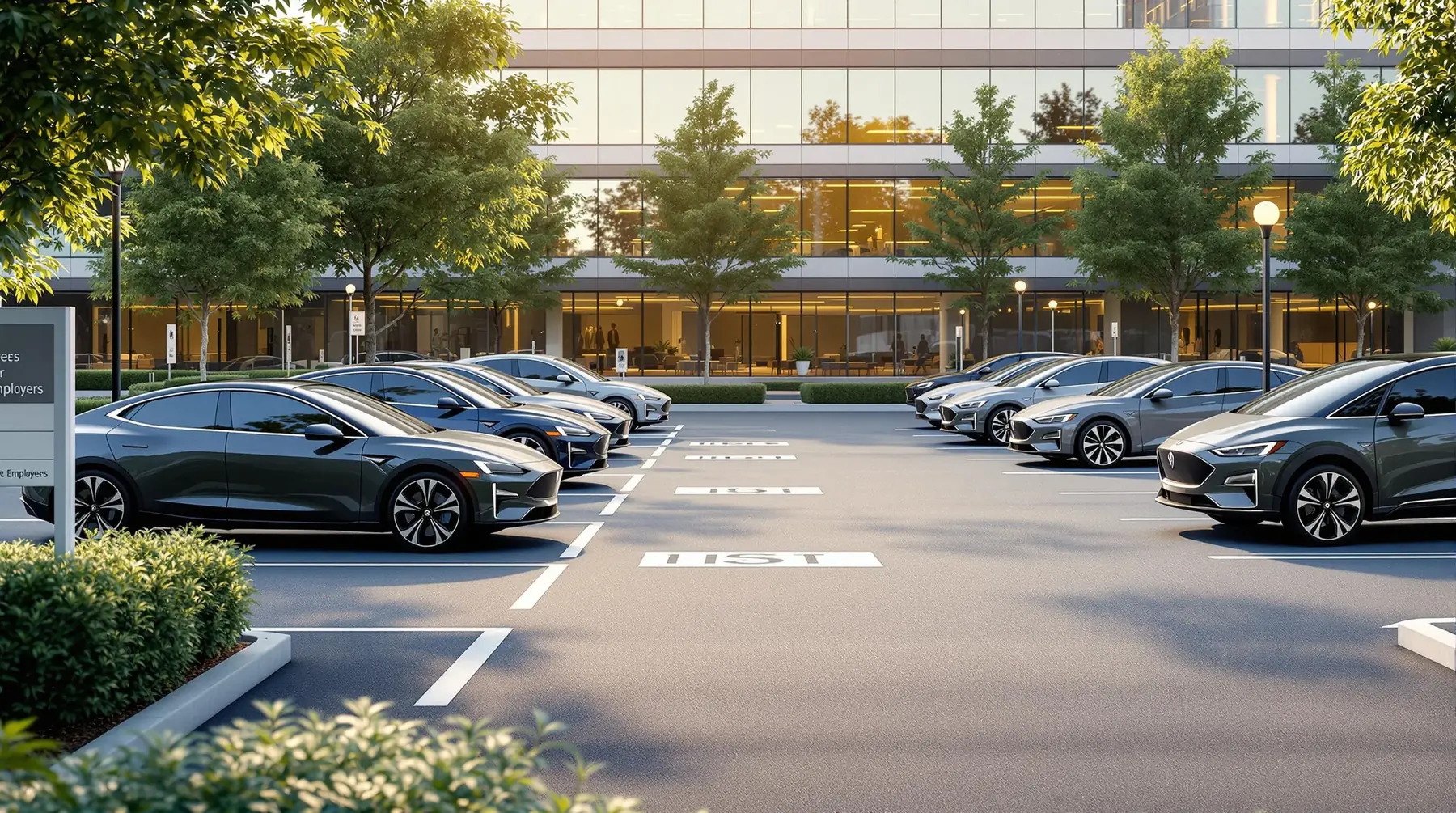
Your team manages projects, books meetings, and even orders lunch through seamless apps and integrations. So why does finding a parking spot still feel like a chaotic free-for-all? An outdated approach to parking creates a frustrating disconnect in an otherwise modern workplace. The right technology can bring the same level of efficiency and ease to your parking lot that you expect everywhere else in your business. By integrating office parking into the tools your team already uses, you can eliminate a major source of daily friction. Here, we’ll walk through the key features of a modern parking solution and how it supports a smarter, more connected hybrid office.
How to Make Office Parking Work for Your Hybrid Team
Smart parking management systems enhance efficiency and sustainability in hybrid work environments.
- What it does: Uses technology to optimize parking space usage and support flexible, eco-friendly commuting.
- Why it matters: Reduces unused parking spaces, improves employee satisfaction, and integrates seamlessly with office tools.
- Key benefits: Dynamic space allocation, real-time availability, green transport options, and seamless system integrations.
- Who it’s for: Ideal for hybrid workplaces aiming to streamline parking management and reduce operational costs.
The Challenge of Urban Office Parking
Finding a parking spot in a busy city can feel like a competitive sport, and it’s one that often leaves your employees feeling stressed before they even walk through the office doors. This daily struggle isn't just an inconvenience; it has a real impact on productivity, punctuality, and overall job satisfaction. For companies trying to create a welcoming and efficient hybrid work environment, the parking problem is a significant hurdle. It’s a logistical puzzle that affects everyone, from the daily commuter to the occasional visitor, and solving it is key to making the office a destination people actually want to come to.
The Hidden Costs of "Free" Parking
The term "free parking" is often a misnomer. While a spot might not have a meter, it comes with hidden costs, primarily in the form of wasted time and fuel. In a city like New York, where an estimated 97% of on-street parking spaces are free, drivers spend an average of 107 hours each year just searching for a spot. This isn't just frustrating for the individual; it's a drain on productivity that ripples through the workday. When employees arrive late and flustered, their focus is scattered, and the first part of their day is spent recovering from the commute rather than contributing to their team's goals.
Understanding Average Parking Rates in Major Cities
When employees can't find free parking, they turn to paid lots, and the costs add up quickly. In major urban centers, daily parking rates can be a significant financial burden. For example, services like SpotHero show that parking rates in NYC can start from $9 but often climb much higher, especially in prime locations. With nearly half of New Yorkers owning cars, the competition for these spots is fierce. This expense can deter employees from coming into the office, undermining efforts to foster collaboration and company culture. For businesses, this means that a lack of accessible, affordable parking can directly interfere with their hybrid work strategy.
How a Parking Management System Solves These Challenges
Implementing an office parking management system transforms the chaotic morning scramble into a streamlined, predictable process. Instead of leaving parking to chance, these systems allow you to manage your company’s parking resources efficiently, ensuring that the employees who need a spot can reserve one in advance. This technology removes the guesswork and stress from the daily commute, directly contributing to a more positive employee experience. By providing a clear and simple way to book parking, you empower your team to plan their office days with confidence, knowing a space is waiting for them. This level of organization is fundamental to creating a functional and attractive hybrid workplace.
Benefits for Employees and Visitors
For employees, the most immediate benefit of a parking management system is the peace of mind it provides. Knowing they have a guaranteed spot eliminates the anxiety of the morning search, allowing them to start their day on a positive note. This convenience extends to office visitors and clients, creating a welcoming first impression. When the arrival process is smooth and professional, it reflects well on the entire organization. It shows that you value their time and have thoughtfully considered every aspect of their experience with your company, from the moment they arrive to the moment they leave.
Smooth Entry and Exit
Modern parking systems create a frictionless experience for everyone. Employees can manage their own parking and gain entry using identifiers they already have, like license plates or employee badges. This automation means no more fumbling for tickets or waiting in line at a payment machine. The process becomes as simple as driving in and driving out, which saves time and reduces congestion in the parking area. This seamless flow is especially valuable during peak hours, ensuring that the start and end of the workday are as efficient as possible for your entire team.
Self-Service and Guest Access
A great parking solution also simplifies visitor management. Instead of a manual, time-consuming process, you can grant guests access to designated or even restricted parking areas through a self-service portal. This empowers your team to manage their own visitors without needing to involve an administrator for every arrival. Whether it’s a client coming for a big meeting or a candidate for an interview, providing easy parking access shows a high level of professionalism and care, setting a positive tone for the visit before they even step into the building.
EV Charging Management
As more employees switch to electric vehicles, on-site charging is becoming a highly sought-after amenity. An integrated parking management system can include features for managing EV charging stations. This allows employees to not only reserve a parking spot but also ensure they can charge their vehicles during the workday. By offering this perk, you support your team's sustainable commuting choices and help them leave the office with a fully charged car, making their journey home just as convenient as their arrival.
Benefits for the Business
Beyond improving the employee experience, a parking management system offers significant advantages for the business itself. It provides a centralized platform to oversee a valuable company asset, turning a chaotic lot into an organized, efficient, and even revenue-generating part of your operations. This level of control allows you to optimize space, reduce administrative workload, and gather valuable data on your office's parking patterns. Ultimately, it helps you make smarter, data-driven decisions about your real estate and resource allocation, which is crucial for any company operating with a hybrid work model.
Centralized Control and Efficiency
With a dedicated system, you gain full control over your parking facilities with minimal administrative effort. You can set rules, assign specific spots, and monitor usage all from a single dashboard. This centralized approach eliminates the manual tracking and potential conflicts that come with an unmanaged lot. By automating the booking and allocation process, you free up your administrative staff to focus on more strategic tasks. This efficiency is a core benefit, allowing you to manage your resources more effectively and ensure your parking policy is fair and easy to follow.
New Revenue Opportunities
An underutilized parking lot is a missed opportunity. A management system can help you turn those empty spaces into a new source of revenue. You can offer paid parking to the public during off-hours or rent out unused spots to nearby businesses. Furthermore, if you offer EV charging, the system can manage payments for electricity usage, creating another income stream. This allows you to monetize your assets and offset the costs of maintaining the parking facility, turning a logistical challenge into a financial advantage.
Key Features of an Effective Parking Solution
When choosing a parking management system, look for one that offers flexibility, ease of use, and smart features that cater to the needs of a modern workforce. The right solution should do more than just assign spots; it should integrate smoothly into your employees' daily routines. For instance, a system that works within tools your team already uses, like Slack or Microsoft Teams, will see much higher adoption than one that requires a separate app and login. The goal is to find a tool that feels like a natural extension of your existing workplace technology, making it simple for everyone to use.
Flexible Booking Options
A key feature of any effective parking solution is the ability to accommodate different schedules and needs. In a hybrid workplace, not everyone comes to the office every day, so a one-size-fits-all approach to parking doesn't work. The system should allow for various reservation types, giving employees the flexibility to book a spot for the specific time they need it, whether it's for a few hours, a full day, or on a recurring basis. This adaptability ensures that your parking resources are used efficiently and fairly, aligning perfectly with the fluid nature of hybrid work.
Hourly, Daily, and Monthly Reservations
To support a flexible work environment, your parking system must allow employees to book parking for different durations. Someone coming in for a quick meeting should be able to reserve a spot for just a few hours, while a team member planning to be in for the entire day can book it accordingly. For those with a more regular in-office schedule, the option for weekly or monthly reservations can simplify the process further. This level of granularity ensures that you are maximizing the use of your available spaces and catering to the diverse commuting patterns of your team.
Advanced Search and Filters
Finding the right parking spot should be quick and easy. A good system will include advanced search and filtering options that allow users to find a space based on their specific needs. For example, an employee might need a spot that is close to an entrance for accessibility reasons or one that is equipped with an EV charger. Filters for these criteria save time and reduce frustration, helping your team members find and book the perfect spot in seconds. This user-friendly approach is essential for encouraging consistent use of the platform.
Loyalty Programs and Discounts
To encourage employees to commute to the office and use the parking system, you can incorporate rewards and incentives. Some platforms allow you to create loyalty programs where employees can earn points for each booking, which can be redeemed for perks like premium parking spots or other company benefits. You could also offer discounted rates for carpooling or for employees who consistently use the system. These small incentives can go a long way in promoting desired behaviors and making your team feel appreciated for their commitment to in-office collaboration.
Financial and Practical Parking Tips
Managing office parking involves more than just technology; it also requires a good understanding of the financial and practical aspects. From knowing which expenses are tax-deductible to staying on top of local parking regulations, a little knowledge can save your company and your employees a lot of headaches. By providing clear guidance and resources, you can help your team make smarter decisions about their commute, reducing both costs and stress. This proactive approach demonstrates a commitment to employee well-being that extends beyond the office walls.
Navigating Tax Deductions for Parking
It's important for both the business and its employees to understand the rules around tax deductions for parking. While parking tickets are never tax-deductible, other costs might be. According to tax experts, you can often deduct certain costs related to parking and driving for business purposes. This could include the cost of a monthly pass for a company-provided spot or mileage for business-related travel. Advising your employees to consult with a tax professional can help them take advantage of any eligible deductions, reducing their overall commuting expenses.
Best Practices for City Parking
Even with a dedicated office lot, employees may occasionally need to park on the street. Sharing best practices for city parking can be incredibly helpful. This includes reminding them to always double-check signs for restrictions, time limits, and street cleaning schedules. In many cities, parking rules can change daily, so encouraging your team to use official city resources can help them avoid costly tickets and the frustration of being towed. A little bit of local knowledge goes a long way in making the urban commute more manageable.
Checking Local Signage and Rules
Local parking regulations can be complex and are subject to frequent changes. Encourage your team to stay informed by checking official sources before they park. For instance, in New York City, drivers can check the official @NYCASP Twitter account or the NYC311 app to see if alternate side parking rules are in effect. Providing links to these resources in your company's internal communications can be a simple yet effective way to help your employees avoid unnecessary fines and make their commute to the office a little bit easier.
Frequently Asked Questions
Our office has very limited parking. How can a management system help if we don't have enough spots for everyone? That's actually the perfect scenario for a parking management system. When spots are scarce, the goal is to make sure they're used efficiently. A system allows you to allocate spots to employees who are confirmed to be in the office on a given day, preventing spaces from sitting empty. It creates a fair, reservation-based process so your team isn't competing for spots, which reduces stress and ensures the people who need parking most can get it.
Will my team have to learn another new app just to book a parking spot? Not at all. The most effective parking solutions integrate directly into the communication tools your team already uses every day, like Slack or Microsoft Teams. This means booking a parking spot can be as simple as a quick command or click within a platform they're already comfortable with. This approach removes the friction of downloading and learning a separate app, which makes it much more likely that your team will actually use it.
How does a parking system handle visitors or clients coming to the office? A good system simplifies guest parking significantly. Instead of having an administrator manage every request, it can empower your employees to reserve a spot for their own guests through a self-service portal. This ensures your visitors have a guaranteed place to park when they arrive, creating a professional and welcoming experience from the very beginning without adding to your administrative workload.
Is it possible to manage EV charging stations with the same system? Yes, many modern parking management platforms include features specifically for managing EV charging stations. This allows employees with electric vehicles to not only reserve a parking space but also book time at a charging station. It’s a great way to support your team's sustainable commuting choices and offer a valuable amenity that makes their workday more convenient.
Can a parking system actually generate revenue for the company? It certainly can. A management system gives you clear data on when your parking spots are being used and when they're sitting empty. With this information, you can confidently rent out unused spaces to the public during off-peak hours or on weekends. If you offer EV charging, the system can also manage payments for electricity, creating another small but steady stream of income from your existing assets.
Key Takeaways
- End the Morning Scramble for Parking: An unmanaged lot creates stress and wastes time before the workday even begins. A parking management system provides the predictability your hybrid team needs, allowing them to reserve a spot in advance and start their day focused.
- Make Your Parking Lot a Strategic Asset: A smart parking solution does more than just assign spots. It gives you centralized control to improve efficiency, offers valuable perks like EV charging for employees, and can even create new revenue streams from underused spaces.
- Choose a System Your Team Will Actually Use: The most effective tool is one that fits into your team's existing habits. Prioritize solutions that offer flexible booking options and integrate directly with the communication platforms you already use, like Slack or Teams, to ensure easy adoption.


